
A plain-language look at the process, the cost, and the questions worth asking before you sign.
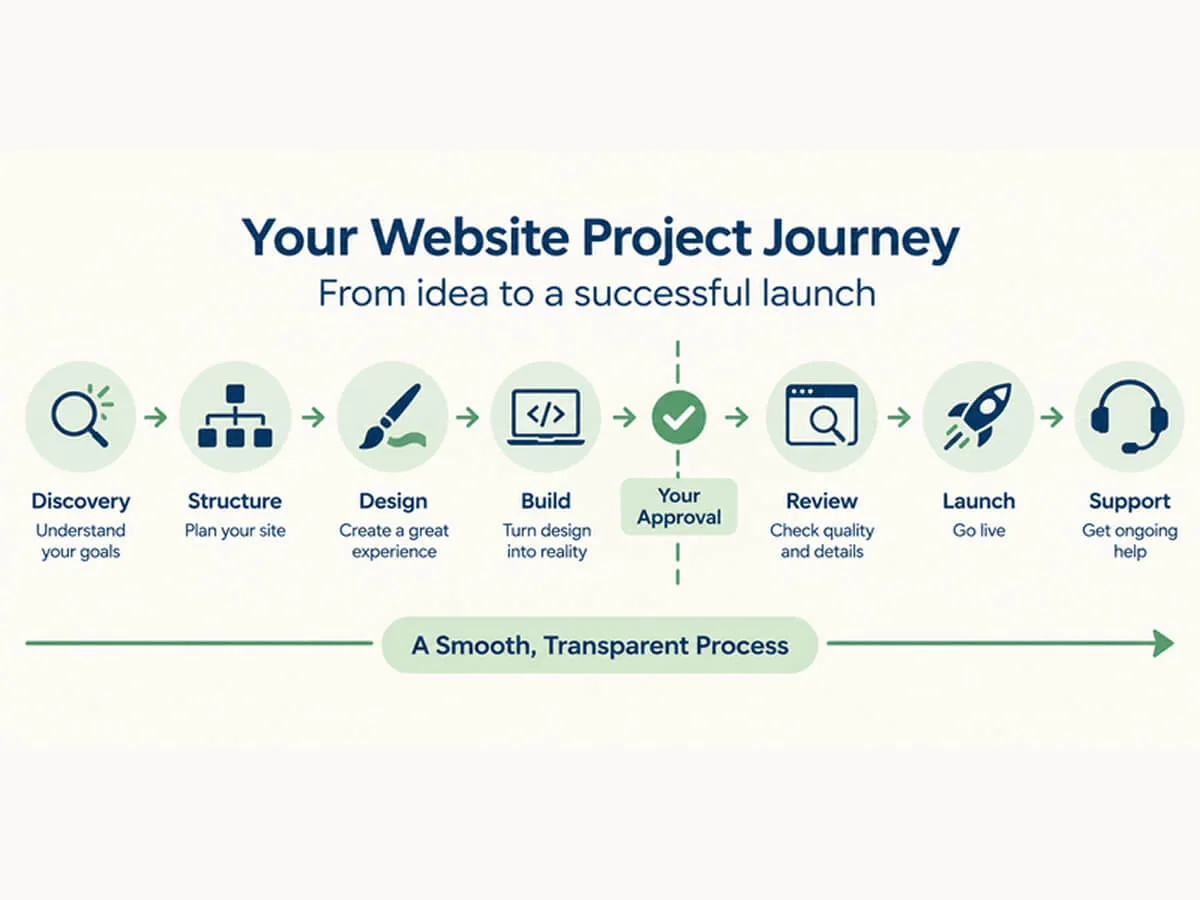
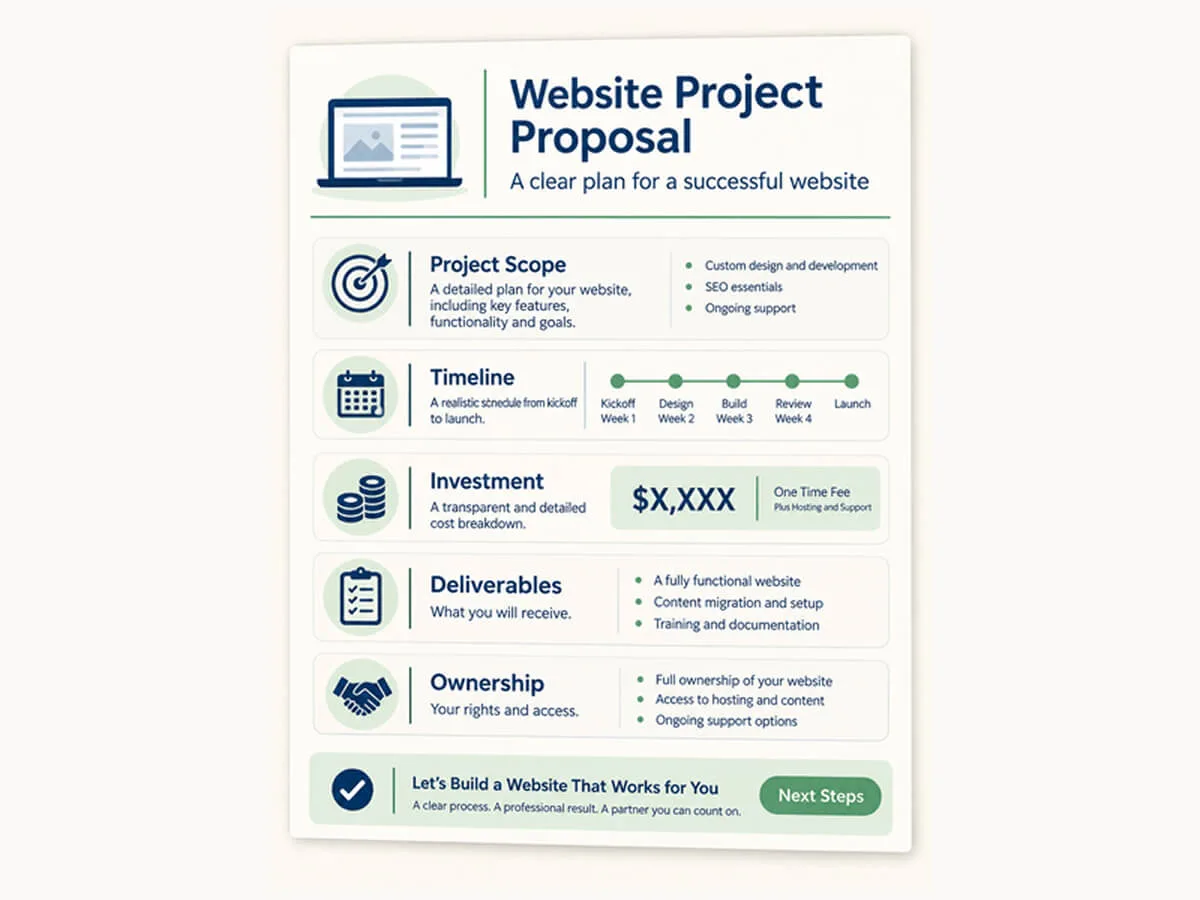
Hiring a web studio usually means moving through a defined sequence: discovery, structure, design, build, review, launch, and a period of support afterward, with your input needed at specific points along the way. A good studio explains that sequence before you sign, agrees scope, timeline, cost, and ownership in writing, and treats launch as the beginning of the site's working life and not the end of the engagement.
For an owner who has never commissioned a website, the process can feel opaque. This article walks through what typically happens, what will be asked of you, what affects the cost, and which questions help reveal a partner who will do the work well.
How Is a Studio Different From a Freelancer or a Large Agency?
There is no single right answer, and the differences are mostly about structure. A freelancer is one person, who may be excellent at a particular part of the work, and who is also a single point of dependency if they become unavailable. A large agency offers breadth and many specialists, with more layers between you and the people doing the work, and overhead that is reflected in the price. A boutique studio tends to sit between the two, with a small senior team that covers strategy, design, and development and stays close to each project.
What matters more than the label is who will actually do the work, how they will communicate with you, and whether the team can cover everything your project needs without handing pieces to strangers. A single skilled person can be the right choice for a simple site. A project that needs strategy, design, technical performance, and ongoing care usually benefits from a team that treats these as one connected job.
What Happens Before Any Design Begins?
The first stage is discovery, and it shapes everything after it. A studio learns what the website is meant to achieve, who it is for, how the business wants to be perceived, and what constraints exist, such as budget, launch date, and who needs to approve decisions. If there is an existing site, a thorough studio audits it. HubSpot's walkthrough of one agency's process describes reviewing the current site's SEO, analytics, and technology to establish a baseline, so that results can be measured against something after launch.
This stage is where strategy happens, and it is the clearest sign of a serious studio. A partner who starts with questions about your customers and goals is building toward the kind of site described in what a high-performing business website actually looks like in 2026. A partner who begins with templates and color palettes is starting at the surface.
How Does the Project Move From Idea to Launch?
After discovery, the work generally moves through a series of stages, each ending in your approval. The studio maps the structure of the site and how visitors will move through it, then produces page layouts, then full visual designs and often clickable prototypes. Development begins only once the designs are approved. In the example HubSpot describes, nothing is coded until the client signs off on the prototypes.
The built site is then reviewed on a private staging version before anything goes live. You and the studio test it, collect feedback, and resolve each change. Launch follows your approval, and it includes connecting the domain and submitting the new site structure to search engines. The sequence of approvals is what keeps a project predictable, because each stage rests on decisions already made and confirmed.
What Will Be Asked of You?
More than most owners expect. You will be asked to articulate goals, supply or approve content, provide access to accounts, review designs, and give timely feedback. HubSpot's guidance on choosing an agency makes the point directly: you do not need to write any code, but that does not mean you have no role in the process. Agree early on how often you will meet, who from your side has authority to approve, and how feedback should be given.
Timing often depends on this involvement. Projects tend to slow when feedback arrives late, when several people give conflicting direction, or when content is still being written after the design is finished. A studio can plan around these realities, but it cannot make decisions for the business. Naming one person to coordinate approvals is one of the simplest ways to keep a project on schedule.
It also helps to gather what already exists before the project starts: logo files, brand guidelines, photography, testimonials, descriptions of services or products, and any previous analytics. Material that is ready on day one removes a common source of delay, and anything missing can be planned for, whether that means commissioning photography or having the studio write the copy.
How Is a Website Priced, and What Affects the Cost?
Pricing models vary. HubSpot notes that studios may charge a one-time project fee, a retainer, or a price per deliverable, and it advises discussing cost before hiring, getting a quote, and confirming it once the scope is clear. Whatever the model, the proposal should state what is included and what is not.
Several factors move the price. The number and complexity of pages, the amount of custom design versus a more standard approach, online store functionality, integrations with other tools, whether the studio writes or edits content, and whether an existing site's search presence needs to be carried over all affect the work involved. A very low quote is worth examining for what has been left out, and a very high one is worth examining for what it contains. The aim is a proposal you can read and understand line by line.
Ask also how changes are handled once the work is underway. Every project meets a moment when someone wants a new page, a different feature, or a revised direction. A good proposal explains how those requests are scoped and priced, so that a reasonable change becomes a short conversation and not a dispute.
What Happens to Your Search Rankings if You Replace an Existing Site?
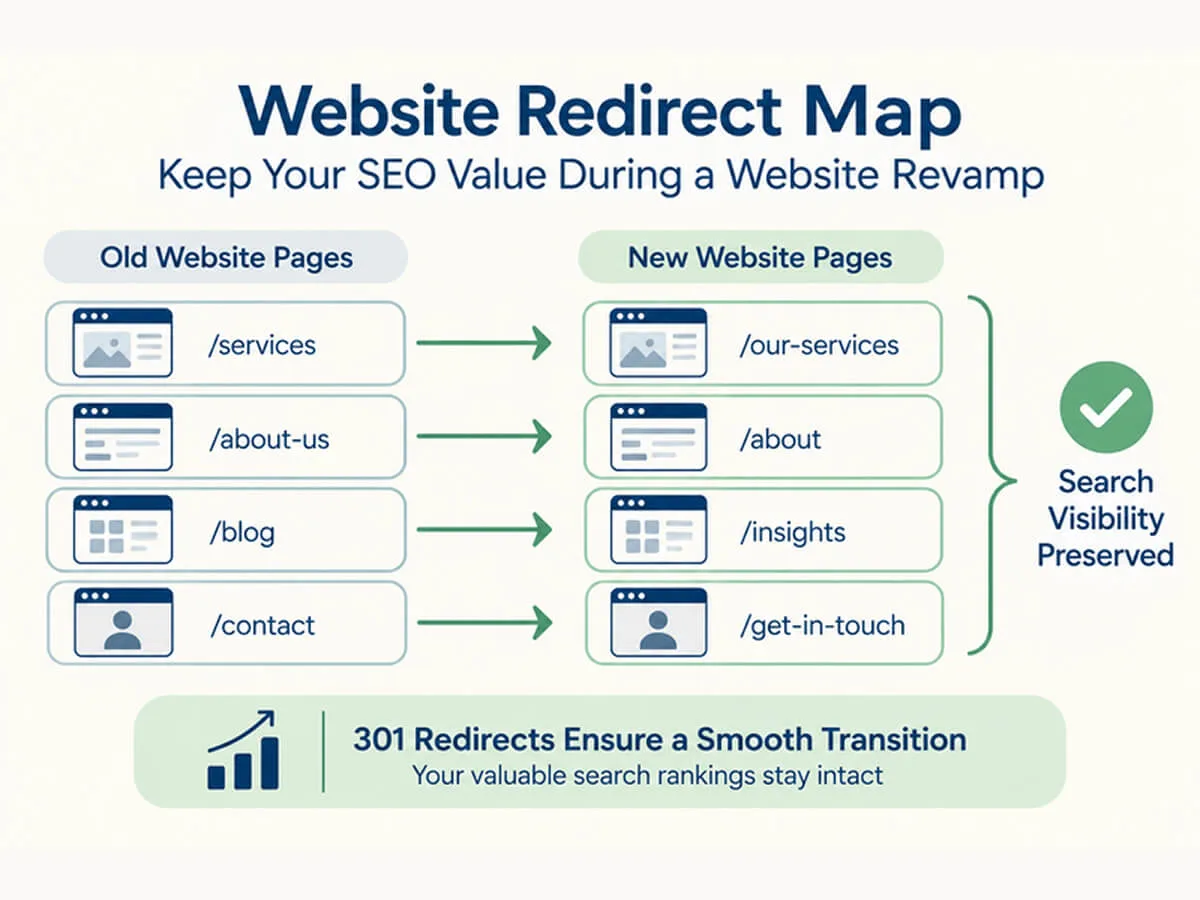
This is the question most owners do not think to ask, and it matters a great deal if the current site brings in visitors. HubSpot's redesign SEO guidance warns that deleting or moving high-value pages can seriously damage rankings, and it describes 301 redirects as one of the most important steps in retaining traffic. It also recommends benchmarking the current site's performance before the redesign, updating the sitemap afterward, and involving someone with technical SEO knowledge from the start.
In practice, that means the studio should be able to explain how existing pages will be mapped to new ones, how redirects will be handled, and how performance will be monitored after launch. A beautiful new site that loses the visibility the old one had has not solved the business's problem.
Who Owns the Website When It Is Finished?
Ownership should be settled in the proposal and not discovered later. Confirm that the domain is registered in your business's name, that hosting and any software subscriptions sit under accounts you control, and that you receive the content, design files, and code you are entitled to. HubSpot lists control among its recommended questions, asking whether you will be able to edit the website yourself and how much control you will have both during the build and afterward.
It is also worth clarifying what happens if the relationship ends. A site that cannot be handed to another developer without a struggle is a dependency, and a clear answer on this point is a sign of a studio that expects to earn your business each year and not trap it.
What Happens After Launch?
Launch is a milestone and not an ending. Sites need updates, security attention, backups, performance checks, and content changes. Some studios include a support period after launch to handle fixes, and HubSpot's example describes a 30-day window for change requests followed by an optional ongoing arrangement. Ask what is covered, for how long, and what ongoing care costs afterward.
The details of that ongoing care are set out in what a website maintenance plan should actually include. The point for now is that the conversation about maintenance belongs in the beginning of the engagement, so that nothing about the site's upkeep is left to chance after the excitement of launch.
It is also reasonable to ask how the studio will confirm that launch went well. A careful team checks forms, redirects, analytics, and page speed on the live site, monitors for problems in the first weeks, and reports back on what it finds. That follow-through is easy to skip when a project ends, and it is one of the clearest differences between a studio that delivers a website and one that delivers a result.
Which Questions Reveal a Good Studio?
HubSpot lists twelve questions worth asking any web development agency, and several are especially useful. Ask what types of websites the studio has built and to see examples, which shows relevant experience. Ask how they measure the success of a project, and whether those measures match your goals. Ask how they will help you meet those goals, in concrete terms. Ask what deliverables you will receive along the way, what the timeline and cost are, how you will communicate, and whether hosting, security, and maintenance are included.
Add a few of your own. Ask who will actually work on your project, since the people in the sales conversation are not always the people doing the work. Ask how the studio uses AI tools in its process and who reviews what they produce. And ask what the studio would do differently if your budget were smaller. The answers show how it thinks, and a studio that responds clearly and honestly is usually one that will work the same way after the contract is signed.
How Do You Know It Is the Right Fit?
Fit is partly practical and partly personal. Practical fit means relevant experience, a clear process, and proposals that are specific rather than vague. Personal fit means you understand the people you will work with, they listen, and they are willing to tell you what they think even when it is not what you hoped to hear. HubSpot flags unwillingness to establish open lines of communication as a red flag, and it notes that no professional should expect to end an introductory call and hand over a finished product at the next conversation.
A boutique studio and a large agency can both do excellent work. What matters is that the approach suits the project, and that the team is accountable for the result. The experienced web design and development partner you want is one who treats your website as a business asset, explains the choices behind it, and remains available as the business grows.
Hiring a studio is a significant decision, and the best protection is understanding. An owner who knows the stages, the questions, and the commitments involved can compare proposals with confidence and recognize a partner who is being straightforward. The goal is a website that reflects the business, performs for it, and belongs to it, built by people who can explain every choice they made along the way.
Ready to hire a studio but unsure what to expect, or what to ask? Whether you're building your first website, replacing one that no longer represents your business, or comparing proposals and wanting a clearer sense of what you're being offered, let's have a conversation that starts with your goals and what you want your website to achieve. From there, a website built with clarity, and a partner you can trust, is a realistic place to begin.
About the Author
Honeyfoot Co is a founder-led boutique web development studio based in South Florida. The studio designs, builds, and maintains websites for business owners across the United States, and offers SEO, AEO, GEO and content strategy, e-commerce, website maintenance, and strategic consultation.
Sources and Further Reading
HubSpot: 12 Questions to Ask a Website Development Agency or Developer Before You Hire Them
HubSpot: An Award-Winning Agency's Website Design Process: 7 Steps
HubSpot: Website Redesign SEO Checklist: Relaunch Your Site Without Losing Rankings