Capturing the Data Was the Easy Part
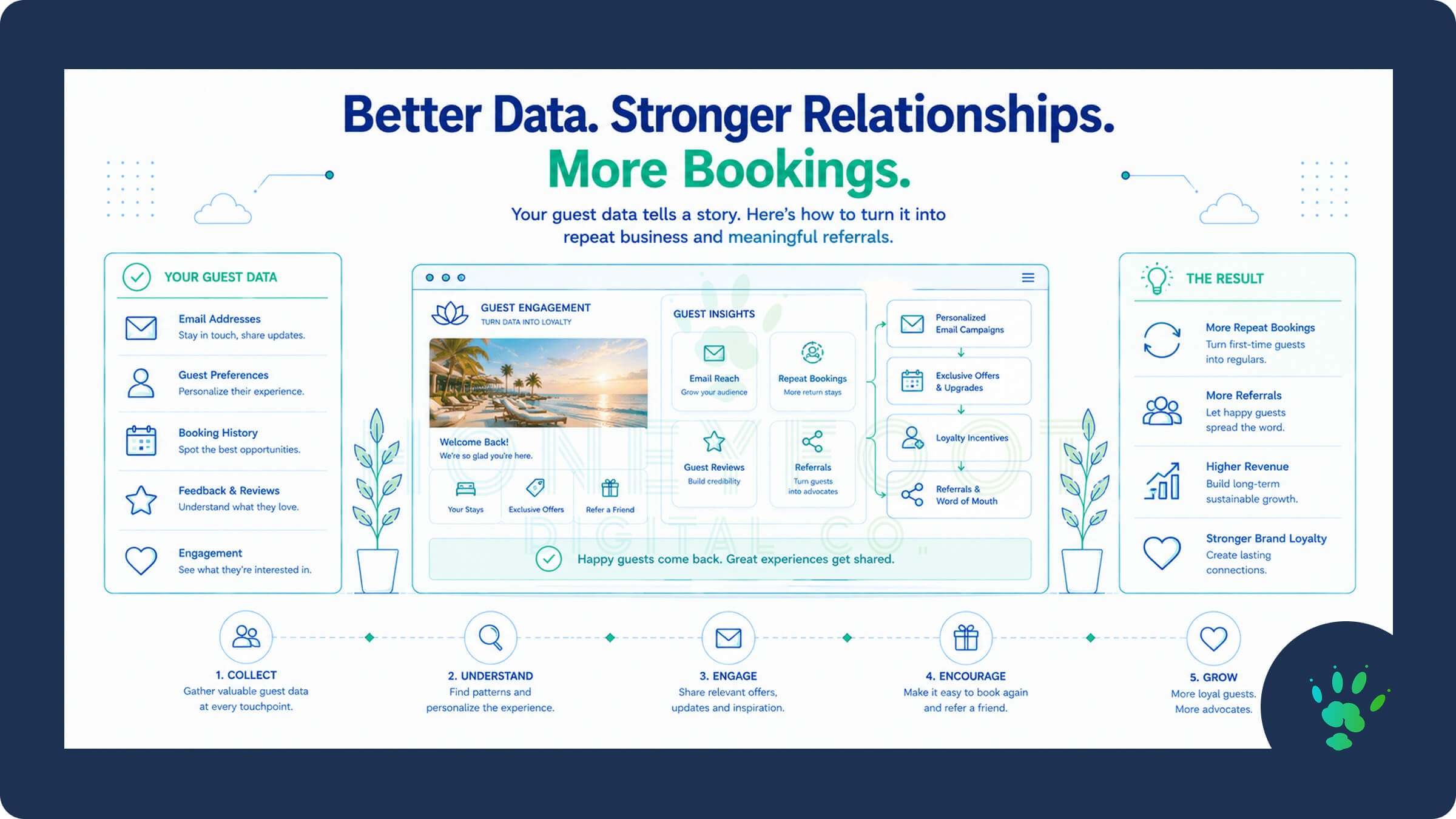
A direct booking hands a business something a third-party reservation never does: an actual relationship with the guest, starting with their contact information and continuing through every interaction that follows. Most businesses that make the effort to build a strong direct booking channel stop right there, treating the data itself as the win, when the data is really just the starting point for something far more valuable.
An email address sitting unused in a booking system isn't an asset. It's a missed opportunity quietly waiting to expire, and most hospitality and luxury service businesses have more of these than they realize. The businesses that actually benefit from a strong direct booking channel are rarely the ones that simply built it. They're the ones that also built something to do with what it generates.
The Gap Between Collecting Data and Using It
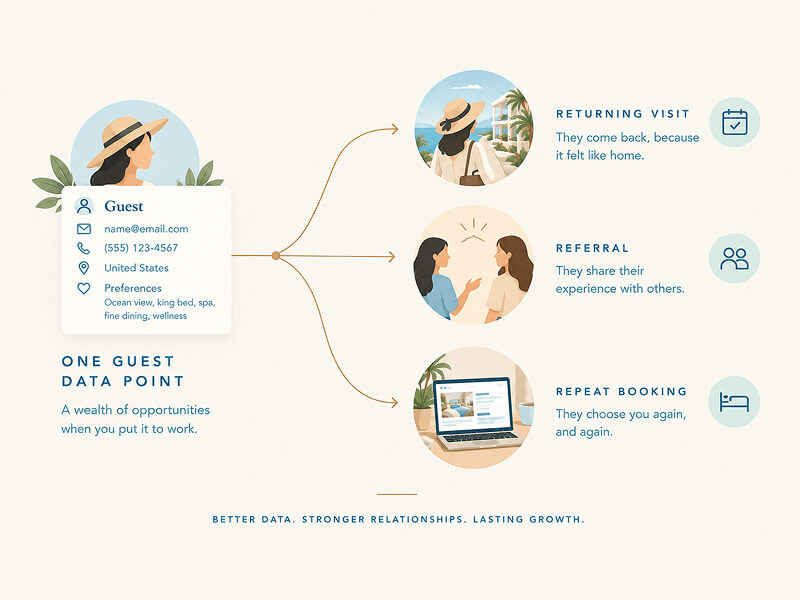
Plenty of businesses have built a genuinely strong direct booking path and are now capturing guest information at a meaningful rate. Far fewer have built anything resembling a system for actually using that information after the booking is complete. The data sits in a booking platform or a spreadsheet, technically available, functionally inert, treated more like a record to keep than a relationship to build on.
This gap matters because the value of guest data isn't in having it. It's in what happens next: whether a guest hears from the business again in a way that feels genuine rather than generic, whether they're invited back at the right moment, and whether the business ever actually asks them to send a friend their way. None of that happens automatically just because an email address was collected at checkout. It requires someone, or some system, actually doing something with it on a consistent basis.
What a Post-Stay Follow-Up Should Actually Include
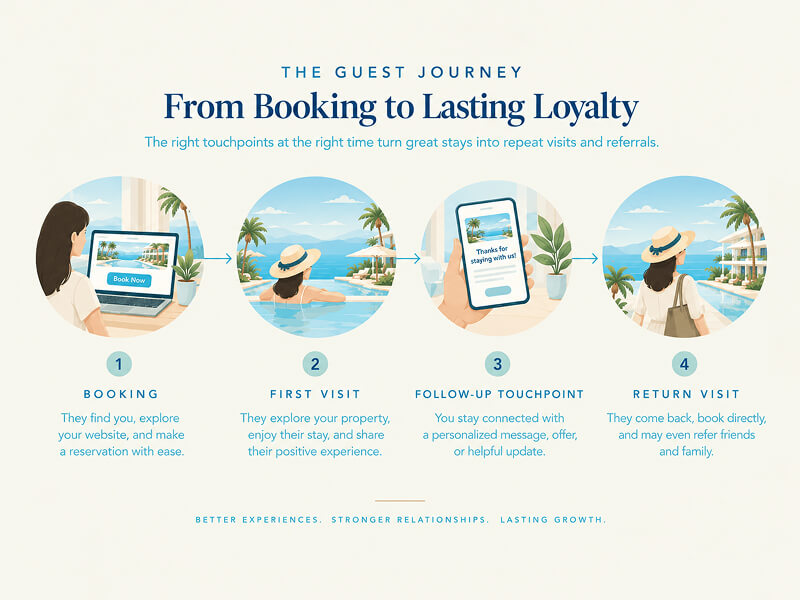
The period immediately after a guest's experience is the highest-leverage moment available for building an ongoing relationship, and it's also the moment most businesses handle worst, if they handle it at all. A genuine follow-up isn't a generic “thanks for staying with us” email sent on autopilot. It's a moment to reinforce the experience the guest just had, while it's still fresh enough to matter.
A strong follow-up typically does a few specific things: it acknowledges the guest by name and, ideally, by the specifics of what they actually experienced, it invites feedback in a way that feels genuinely welcomed rather than perfunctory, and it plants a natural, low-pressure seed for a return visit without turning the message into a hard sell. Getting the tone right here matters more than getting the mechanics right. A guest who just paid for a luxury experience will notice, consciously or not, whether the follow-up feels like it was written by someone who actually cared, or generated by a system that doesn't know or care who they are.
Building a System for Repeat Guests, Not Just One-Time Transactions
Most booking systems are built around a single transaction: a guest books, the business delivers, the relationship effectively ends until, maybe, the guest happens to think of the business again on their own. Building a system for repeat guests means treating that end point as a beginning instead.
This starts with basic segmentation: distinguishing a first-time guest from a returning one, noting significant details worth remembering, an anniversary, a preference, a special occasion, and using that information to make future communication feel considered rather than generic. A returning guest who's remembered, even in a small way, tends to feel genuinely valued in a way that meaningfully strengthens loyalty. A returning guest treated identically to a first-time visitor is being given very little reason to feel that their history with the business actually matters.
Turning Guests Into Referral Sources
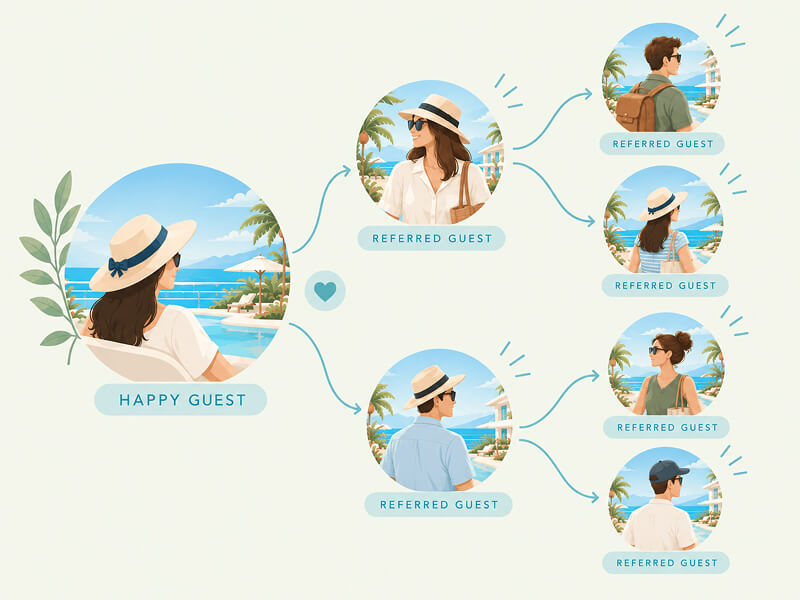
A satisfied guest is a genuine asset beyond their own repeat business, and most businesses never actually ask them to act on it. Referrals tend to happen organically at a low rate on their own, but a business that makes it easy and natural to refer a friend, at the right moment, sees meaningfully more of them than one that simply hopes word of mouth happens by itself.
The right moment matters here. Asking for a referral immediately at the point of booking, before the experience has even happened, asks for advocacy before it's actually been earned. Asking shortly after a genuinely strong experience, when the guest's enthusiasm is at its peak, is a fundamentally different and far more effective request. This is another reason the post-stay follow-up matters so much: it's frequently the single best moment to make this ask, and most businesses let it pass by unused.
It's also worth making the actual mechanics of referring someone genuinely easy. A vague closing line asking a guest to “tell their friends” asks them to do all the work themselves, from remembering to actually following through. A specific, low-friction way to share, a direct link, a simple offer for both the guest and the friend they refer, removes exactly the kind of friction that causes a good intention to quietly never happen.
Using Guest Data Responsibly
None of this works if it comes across as invasive rather than considerate, and this distinction matters more for luxury and hospitality businesses than almost any other category, because trust and discretion are often part of what the business is actually selling. A guest who feels surveilled or over-marketed to, rather than genuinely remembered, experiences the opposite of the considered, attentive relationship this approach is meant to build.
This means being deliberate about frequency, relevance, and tone. A thoughtful, occasional message that clearly reflects genuine attention to the guest's actual experience does far more good than a high-frequency drip campaign that reads like it was sent to everyone in the database at once. Respecting the guest's inbox is, in its own way, an extension of the same hospitality the business is trying to deliver everywhere else, and getting this balance wrong can undo much of the goodwill the original experience worked so hard to build.
Timing Matters as Much as Content
Even a well-written message lands poorly if it arrives at the wrong moment. A follow-up sent too soon, before a guest has had time to actually reflect on the experience, can feel presumptuous. One sent too late loses the immediacy that makes a genuine response likely at all. There's a window, typically measured in days rather than weeks, where a follow-up feels timely rather than either rushed or forgotten.
The same logic applies to invitations to return. A message inviting a guest back six months after their visit, with no clear reason tied to the timing, reads as generic outreach. A message tied to something specific, an upcoming season the business knows the guest previously enjoyed, an anniversary of their original visit, a genuinely relevant offer, reads as considered rather than automated, even when it technically is automated behind the scenes.
Small Details Compound Into a Real Advantage
None of the individual pieces here are complicated on their own. A well-timed thank-you note, a small detail remembered from a previous visit, a natural moment to ask for a referral: none of these require sophisticated technology or a large team to execute. What they require is consistency, actually doing them every time, rather than only when someone happens to remember to.
This is precisely why so many businesses that could easily do this well simply don't. It's not a hard problem to solve. It's an easy one to neglect, because none of these individual actions feels urgent on any given day, even though their cumulative absence quietly costs the business a meaningful amount of repeat revenue and referral business over time. The businesses that build this into an actual habit, rather than an occasional afterthought, tend to see the compounding benefit show up clearly in how much of their business comes from guests who have been there before, or were sent by someone who has.
What This Actually Requires From the Website
None of this happens without the technical groundwork to support it. Capturing guest data cleanly at the point of booking, rather than through a bare-bones contact form, and connecting that data to some kind of ongoing communication system, whether that's a simple email platform or something more robust, is a prerequisite most businesses haven't actually built yet.
This is directly connected to the value of a strong direct booking channel in the first place, discussed in the earlier piece on guest data and the direct booking relationship. Data captured through a third-party platform typically never reaches the business at all. Data captured directly is only valuable if there's an actual system in place to do something with it afterward, which is precisely the part most businesses haven't gotten around to building.
What This Looks Like in Practice
None of this requires an elaborate marketing operation. A simple, well-timed follow-up sequence, a basic way of noting repeat guests and meaningful details about them, and a natural, well-placed invitation to refer a friend cover most of the actual value available here. Customer relationship research consistently shows that there is a substantially higher chance of a repeat sale to an existing customer than converting a brand new one, and that acquiring a new customer costs meaningfully more than retaining one already familiar with the business, which makes this exactly the kind of investment that pays for itself many times over.
The businesses that do this well aren't necessarily running more sophisticated marketing than their competitors. They're simply not leaving an asset they already worked hard to capture sitting completely unused. Given how much effort typically goes into building a strong direct booking channel in the first place, treating what it generates as an afterthought is one of the more avoidable ways that effort ends up underperforming its actual potential.
When a guest finishes an experience with your business, what actually happens next, and is it anything at all? If the honest answer is silence until they happen to think of you again on their own, that's a real, addressable gap, and often one of the highest-return improvements available once a direct booking channel is already in place. Let's talk about what happens after the booking.
Sources and Further Reading